
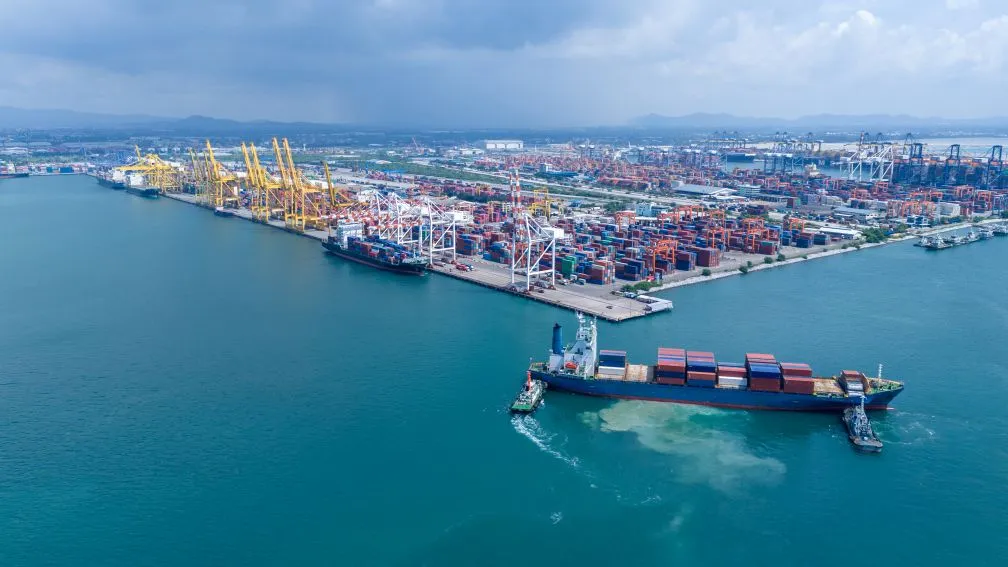
Global trade depends on transportation networks that connect manufacturers, suppliers, logistics providers, distribution centers, and customers across international markets.
But these networks are not static.
Trade routes evolve as sourcing patterns change, transportation capacity shifts, infrastructure develops, and geopolitical or environmental disruptions affect established corridors.
A route that once provided the most efficient connection between two markets may become more expensive, congested, or operationally unreliable.
For businesses, these changes create challenges that extend far beyond transportation.
Alternative routes may require different carriers, customs procedures, warehouses, transit schedules, and distribution strategies. A change affecting one part of the network can influence inventory availability, operating costs, and customer commitments throughout the supply chain.
This is why logistics network adaptation is becoming an increasingly important capability in international commerce.
Logistics network adaptation is the process of adjusting transportation routes, carriers, gateways, inventory locations, and operational coordination when changes in global trade conditions affect established supply chain networks.
The objective is not simply to find another route.
It is to maintain connectivity across the entire supply chain when established transportation patterns change.
According to UN Trade and Development (UNCTAD), maritime transport remains central to international merchandise trade, making changes in shipping routes and port connectivity particularly important to global supply chains.
As global commerce continues evolving, businesses increasingly need logistics networks capable of adjusting without losing operational coordination.
Why Global Trade Routes Are Constantly Evolving
International trade corridors develop around a combination of economic, geographic, operational, and commercial factors.
Manufacturing locations influence where goods originate. Consumer demand determines destination markets. Transportation infrastructure connects production and consumption. Trade agreements and regulatory frameworks influence how goods cross borders.
When these conditions change, logistics networks must respond.
Several factors can influence the evolution of global trade routes:
- Changes in manufacturing and sourcing locations
- Geopolitical developments and trade restrictions
- Port congestion and transportation capacity constraints
- Infrastructure investment and new logistics hubs
- Climate-related disruptions and severe weather
- Changes in international transportation costs
- Shifting regional demand and trade relationships
The World Trade Organization (WTO) monitors developments in international merchandise trade and provides research on changing trade patterns.
World Trade Organization – Global Trade Outlook and Statistics
These developments demonstrate why global logistics networks cannot depend exclusively on historical transportation patterns.
A route that works efficiently under one set of conditions may require reconsideration when those conditions change.
Businesses must therefore understand not only where their cargo moves today, but also which alternatives could become necessary tomorrow.
What Is Logistics Network Adaptation?
Logistics network adaptation refers to the operational adjustments businesses and logistics providers make when established supply chain routes, connections, or infrastructure become less effective.
These adjustments may include changing transportation modes, selecting alternative ports or airports, using different carriers, repositioning inventory, or modifying distribution strategies.
However, adaptation is different from simply reacting to a disruption.
Reactive logistics focuses on solving an immediate problem after it occurs.
Adaptive logistics combines contingency planning, network visibility, specialized expertise, and operational alternatives to respond more effectively when conditions change.
For example, a company experiencing recurring congestion at a major gateway may evaluate another port, adjust inland transportation, or reconsider inventory positioning.
The decision requires more than comparing two transportation rates.
It involves understanding the total effect on the supply chain.
This is closely connected to supply chain flexibility, which enables businesses to create and use alternatives across sourcing, transportation, inventory, and distribution.
Diversification creates options. Logistics network adaptation determines how those options can be implemented.
When Trade Routes Change, the Entire Supply Chain Is Affected
A transportation route is only one component of a larger logistics network.
When an established route changes, the effects can extend across multiple operational functions.
Longer transit times may increase inventory requirements. Alternative gateways may introduce different customs procedures. New carriers may have different schedules or cargo acceptance requirements. Warehouses may need to adjust receiving capacity.
Even customer delivery commitments can be affected.
Consider an importer whose primary ocean transportation route becomes unreliable.
Selecting an alternative port may appear to solve the immediate transportation problem. However, the new gateway could require additional inland transportation, different customs coordination, or revised distribution schedules.
The entire cargo journey must be evaluated.
This is why end-to-end logistics plays an important role in network adaptation.
The strongest response considers how a transportation adjustment influences every subsequent stage, from international freight to final delivery.
Alternative Trade Corridors Require More Than a New Route
When a major transportation corridor becomes constrained, businesses may begin evaluating alternative routes.
But an alternative corridor must offer more than geographic connectivity.
It must have the operational capacity to support the cargo moving through it.
Important considerations include port and airport infrastructure, carrier availability, inland transportation connections, customs capabilities, warehouse capacity, cargo handling requirements, and total transit time.
The World Bank examines how logistics performance, border procedures, infrastructure, and shipment reliability influence international trade connectivity.
These factors help explain why two routes connecting similar markets may deliver very different operational outcomes.
A shorter route is not automatically more reliable.
A less congested port may still create challenges if inland transportation capacity is limited.
A new airport connection may provide speed but lack suitable handling infrastructure for specialized cargo.
Organizations can explore the broader evolution of international corridors in Global Trade Corridors in 2026: How Changing Trade Flows Are Reshaping Logistics.
Effective logistics network adaptation requires evaluating the complete corridor rather than selecting an alternative based on distance or transportation cost alone.
Freight Forwarders Help Reconfigure Transportation Networks
Freight forwarders play an important coordinating role when international transportation networks change.
Their responsibilities can extend beyond booking transportation to include carrier coordination, customs documentation, multimodal planning, cargo handling, warehousing, and destination services.
When a trade route becomes less reliable, experienced freight forwarders can help businesses evaluate alternative transportation strategies.
These may involve different carriers, gateways, schedules, or combinations of transportation modes.
Providers of global freight forwarding solutions help connect these decisions across international logistics networks.
However, successful rerouting requires balancing several factors.
The fastest alternative may be significantly more expensive. The lowest-cost option may increase inventory exposure. A new route may introduce operational requirements that are unsuitable for certain cargo.
Freight forwarding expertise helps businesses evaluate these trade-offs in the context of their broader supply chain objectives.
This is particularly important when changing trade routes require coordination between multiple transportation providers and logistics facilities.
Adaptive Logistics Networks Must Balance Efficiency and Flexibility
Global supply chains cannot operate efficiently if every possible alternative is activated simultaneously.
Maintaining excessive redundancy across transportation routes, warehouses, and providers can create unnecessary costs.
At the same time, concentrating every shipment through a single gateway or transportation corridor may create unacceptable dependency.
The challenge is finding the right balance.
Businesses can maintain preferred routes for normal operations while developing qualified alternatives for situations where established connections become constrained.
This approach supports both efficiency and adaptability.
Organizations can explore this principle further in Global Supply Chains: How Diversified Logistics Networks Reduce Disruption Risk.
The objective is not to redesign the entire supply chain every time conditions change.
It is to build enough operational flexibility to adjust transportation decisions while preserving the connectivity of the larger network.
As international trade routes continue evolving, this ability to adapt is becoming an essential part of modern logistics strategy.
Multimodal Transportation Expands Network Options
When established trade routes change, businesses may need to reconsider how different transportation modes work together.
Ocean freight, air cargo, road transportation, and rail each provide distinct advantages in capacity, speed, cost, and geographic connectivity.
Multimodal logistics allows businesses to combine these capabilities within a coordinated transportation strategy.
For example, a shipment traditionally moving through one seaport may be redirected through another gateway and connected to its destination by rail or truck. Time-critical products may require air transportation when longer transit times threaten inventory availability.
However, switching transportation modes requires careful coordination.
Carrier schedules, cargo documentation, customs procedures, warehouse availability, and delivery requirements must remain aligned.
The objective is not simply to identify another way to move cargo.
It is to preserve supply chain continuity while adapting the transportation network.
Air Cargo Can Support Time-Critical Network Adjustments
Aviation provides an important alternative when transportation disruptions create urgent supply chain requirements.
Manufacturers may need critical components to avoid production interruptions. Retailers may need to replenish inventory. Perishable exporters may require transportation within limited product-life windows.
In these situations, air cargo can help businesses respond to changing logistics conditions.
Sunrise Air Cargo contributes international aviation capabilities for shipments where speed and transportation connectivity are important.
The International Air Transport Association (IATA) provides industry standards, programs, and market intelligence supporting the global air cargo sector.
Air transportation is not necessarily a replacement for ocean or ground freight.
Its value often comes from providing an additional option within a diversified logistics network.
Airline representation also contributes to this connectivity.
BlueX GSSA supports airline cargo representation, market development, and capacity strategies that connect airlines with regional freight forwarding markets.
Together, aviation operations and cargo market expertise help support transportation alternatives when international trade patterns evolve.
Specialized Cargo Requires Qualified Alternative Routes
Not every alternative route is suitable for every shipment.
Temperature-sensitive products, pharmaceuticals, high-value goods, and other specialized cargo may require specific transportation conditions, infrastructure, handling procedures, or regulatory compliance.
A route that works for general cargo may be unsuitable for fresh seafood or flowers.
A warehouse may offer available space but lack appropriate temperature-controlled infrastructure.
An airport may provide an alternative connection without offering the specialized handling capabilities required for certain products.
This is why logistics network adaptation must consider cargo characteristics before transportation decisions are made.
LCX Fresh contributes specialized cold chain logistics expertise for perishables and temperature-sensitive products.
The objective is not to maximize the number of available routes.
It is to identify qualified alternatives capable of protecting cargo requirements throughout the journey.
Visibility and AI Improve Network Decision-Making
As logistics networks become more complex, businesses need reliable information across transportation providers, gateways, warehouses, and distribution systems.
Visibility helps organizations understand where shipments are, whether transportation milestones are being met, and where potential disruptions may develop.
Artificial intelligence can support this process by analyzing transportation performance, demand patterns, historical disruptions, and available operational data.
These capabilities can help logistics professionals evaluate alternatives and identify emerging problems earlier.
For example, predictive systems may indicate that a shipment is likely to miss an expected connection, allowing teams to investigate alternative arrangements before the delay affects downstream operations.
Organizations can explore these capabilities in How AI Is Reshaping Global Logistics: From Predictive Planning to Smarter Supply Chains.
Technology improves the information available for decision-making.
Specialized logistics professionals determine how that information should be applied.
How Can Businesses Prepare for Trade Route Changes?
Effective preparation begins before a disruption occurs.
Businesses should understand their most critical transportation dependencies and evaluate which alternatives are operationally realistic.
A practical preparation strategy includes:
- Identifying routes, gateways, and carriers with excessive concentration.
- Evaluating alternative transportation modes and corridors.
- Understanding customs and infrastructure requirements.
- Establishing relationships with qualified logistics partners.
- Improving shipment and inventory visibility.
- Developing contingency plans for time-critical cargo.
- Reviewing transportation alternatives as market conditions change.
Not every business requires the same level of diversification.
The appropriate strategy depends on cargo characteristics, customer commitments, transportation economics, and operational risk.
The goal is to create a network that can respond without requiring every decision to begin from zero.
How LCX Group Connects Adaptive Logistics Capabilities
The specialized companies within LCX Group illustrate how different logistics capabilities can contribute to a more connected transportation ecosystem.
LCX Freight supports international freight forwarding, customs, warehousing, fulfillment, and distribution, helping connect multiple stages of the cargo journey.
LCX Fresh contributes cold chain and perishable logistics expertise where transportation alternatives must preserve product integrity.
Sunrise Air Cargo provides international air cargo capabilities for supply chains requiring aviation connectivity.
BlueX GSSA contributes airline representation, cargo sales, market intelligence, and capacity expertise.
These specialized capabilities support the broader principle behind the LCX Group ecosystem: global logistics connectivity depends on coordinating different areas of expertise.
When trade routes change, this combination of transportation knowledge, specialized handling, market intelligence, and operational coordination becomes increasingly relevant.
The Future of Global Logistics Networks
International trade routes will continue evolving.
Manufacturing patterns will shift, infrastructure will develop, regional markets will grow, and transportation networks will respond to changing economic and operational conditions.
Businesses cannot predict every development.
They can prepare networks capable of responding.
Future logistics strategies will increasingly combine transportation diversification, real-time visibility, predictive technology, specialized expertise, and coordinated decision-making.
The most competitive networks will not necessarily be those that always use the shortest route or lowest-cost transportation option.
They will be those capable of maintaining reliable connectivity as conditions change.
Conclusion
Global logistics networks are constantly adapting to changes in international trade.
When established routes become constrained, businesses may need to evaluate alternative gateways, transportation modes, carriers, inventory locations, and distribution strategies.
But successful adaptation requires more than rerouting cargo.
It requires understanding how each decision affects the complete supply chain.
Multimodal transportation creates options. Air cargo supports time-critical movements. Specialized logistics protects cargo requirements. Visibility and AI improve decision-making. Experienced logistics partners help coordinate operational adjustments.
Together, these capabilities strengthen logistics network adaptation.
For businesses participating in global trade, the objective is not to eliminate uncertainty.
It is to build connected logistics networks capable of responding when established transportation patterns change.
Because the future of global trade will depend not only on where goods move, but on how effectively logistics networks adapt to keep them moving.