
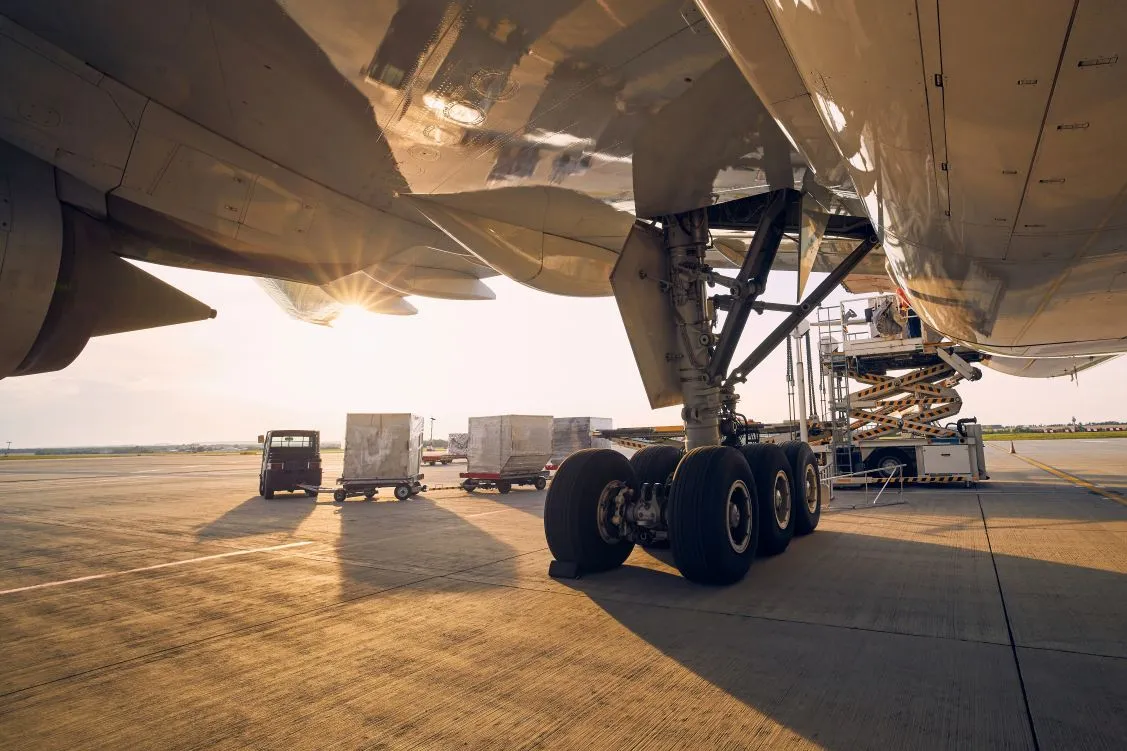
Global commerce depends on speed, connectivity, and the ability to move products reliably between markets. While ocean freight, trucking, rail, warehousing, and distribution all play essential roles, aviation occupies a unique position within this global logistics ecosystem.
Air transportation connects distant markets within hours rather than weeks. It supports time-critical industries, moves high-value products, protects temperature-sensitive cargo, and gives businesses additional transportation options when traditional supply chains experience disruption.
In 2026, the strategic importance of aviation logistics extends far beyond simply moving freight by air. Airlines, General Sales and Service Agents (GSSAs), freight forwarders, ground handlers, airports, customs authorities, cold chain specialists, and technology providers work together to create an interconnected infrastructure supporting global trade.
According to the International Air Transport Association (IATA), air cargo transports only a small proportion of world trade by physical volume but represents more than one-third of global trade by value.
This concentration of value demonstrates why aviation remains critical to industries where speed, reliability, product integrity, and market access matter most.
Why Is Aviation Important to Global Supply Chains?
Aviation provides something few other transportation modes can match: the ability to connect distant markets rapidly.
A product manufactured in one region can reach customers thousands of miles away within days—or sometimes hours. This dramatically changes how businesses manage inventory, respond to demand, and participate in international markets.
Aviation is particularly valuable when businesses need to:
- Move time-sensitive cargo
- Protect high-value shipments
- Replenish critical inventory
- Reach distant markets quickly
- Transport temperature-sensitive products
- Respond to unexpected supply chain disruptions
- Support urgent production requirements
The value of aviation therefore extends beyond transportation speed.
It gives businesses flexibility.
Within increasingly complex global supply chains, that flexibility can help organizations protect customer commitments, reduce disruption, and access markets that would otherwise require significantly longer transportation times.
Air Cargo Keeps High-Value Global Trade Moving
Not every shipment requires air transportation.
For many commodities, ocean freight remains the most economical solution for international transportation. But when time, value, or product sensitivity becomes critical, air cargo provides capabilities that other transportation modes cannot easily replicate.
Industries heavily dependent on air cargo include:
- Pharmaceuticals and healthcare
- Electronics and technology
- Aerospace
- Automotive
- Fresh produce
- Flowers
- Seafood
- Ecommerce
- Industrial components
- High-value goods
Providers of air cargo operations support these industries by connecting major markets with reliable transportation designed around speed and operational efficiency.
The role of air cargo is therefore not to replace other transportation modes. Instead, it complements ocean, road, and rail transportation within multimodal supply chains.
Businesses can select transportation strategies according to urgency, inventory requirements, product value, and customer expectations.
Aviation Logistics Supports Time-Critical Supply Chains
Time has become one of the most valuable resources in global logistics.
A manufacturing company waiting for a critical component may face significant production losses if a shipment arrives several weeks late. A pharmaceutical product may have a limited usable life. Fresh flowers or seafood can lose commercial value rapidly when transportation takes too long.
Aviation logistics helps reduce these risks by dramatically shortening international transit times.
This capability is especially important for just-in-time supply chains, where businesses maintain lower inventory levels and depend on reliable transportation to keep production and distribution moving.
Air cargo can also support emergency replenishment strategies.
If inventory unexpectedly falls below required levels, businesses may use air transportation for a portion of an order while the remaining products continue through slower transportation modes.
This flexibility allows companies to protect business continuity without necessarily shifting their entire supply chain to air freight.
Freight Forwarders Connect Aviation With the Broader Supply Chain
Airlines represent only one part of the aviation logistics ecosystem.
Freight forwarders play an equally important role by connecting air transportation with manufacturers, suppliers, warehouses, customs authorities, ground transportation, and final customers.
Providers of global freight forwarding solutions help organizations determine when air cargo is appropriate while coordinating the broader transportation journey.
A freight forwarder may coordinate:
- Cargo collection from the supplier
- Export documentation
- Airport transportation
- Airline booking
- Customs procedures
- International air transportation
- Destination handling
- Import clearance
- Final delivery
This coordination transforms an individual flight into a complete logistics solution.
For businesses operating internationally, the real value often comes from connecting aviation seamlessly with the rest of the supply chain.
Aviation Provides an Alternative When Supply Chains Are Disrupted
Supply chain disruptions can occur with little warning.
Port congestion, severe weather, infrastructure problems, geopolitical tensions, production delays, and unexpected demand increases can all affect transportation schedules.
Organizations that depend exclusively on one transportation mode may have limited alternatives when these situations occur.
Aviation creates another option.
When strategically integrated into transportation planning, air cargo can help businesses bypass disrupted routes, accelerate critical inventory, and maintain customer commitments.
This is one reason aviation has become increasingly connected with broader discussions around logistics resilience.
Businesses are not necessarily shifting every shipment to air transportation. Instead, they are creating flexible supply chains where different transportation modes can be activated depending on operational conditions.
Organizations interested in this strategy can also explore Supply Chain Resilience in 2026: How Specialized Logistics Partners Reduce Risk, which examines how specialized logistics capabilities work together to reduce operational exposure.
Aviation Connects Emerging and Established Markets
One of aviation’s greatest contributions to world trade is connectivity.
Air cargo networks allow producers in emerging markets to access customers in established economic centers while giving global businesses access to suppliers and products from around the world.
This connectivity is particularly important for regions exporting products with limited shelf lives or high value-to-weight ratios.
Latin American flowers, seafood, fresh produce, pharmaceuticals, electronics, and specialized industrial products can reach international markets rapidly through aviation networks.
The World Trade Organization (WTO) emphasizes the importance of efficient transportation and trade connectivity in enabling businesses to participate successfully in international commerce.
As global supply chains continue diversifying, aviation will remain essential for connecting production centers, commercial hubs, and consumers across continents.
Aviation Is Part of a Larger Logistics Ecosystem
Perhaps the most important way to understand aviation logistics is not as an isolated industry but as part of a larger global supply chain ecosystem.
An international air cargo shipment may involve an exporter, freight forwarder, trucking provider, warehouse, GSSA, airline, ground handler, customs authority, cold chain facility, importer, and distributor.
Each participant contributes a specialized capability.
The effectiveness of the shipment depends on how successfully those capabilities work together.
This is why collaboration has become one of the defining characteristics of modern aviation logistics.
When airlines, freight forwarders, GSSAs, specialized logistics providers, and technology platforms operate as connected partners, aviation becomes more than a transportation mode.
It becomes a critical infrastructure connecting global supply chains and keeping world trade moving.
Cold Chain Aviation Protects Time- and Temperature-Sensitive Cargo
Some of the products that depend most heavily on aviation are also among the most sensitive.
Fresh flowers, seafood, produce, pharmaceuticals, biotechnology products, and other perishables may lose quality or commercial value rapidly when transportation conditions are not carefully controlled.
For these shipments, speed alone is not enough.
Temperature management, specialized handling, monitoring, airport coordination, storage conditions, and rapid transfers must work together throughout the logistics journey.
Specialized cold chain logistics solutions connect these requirements with air transportation to help maintain product integrity from origin to destination.
Consider the journey of fresh flowers exported from Latin America. Flowers may move from farms to temperature-controlled facilities, travel by refrigerated truck to an airport, be prepared for air transportation, fly internationally, clear customs, and enter another distribution network before reaching retailers.
Every stage matters.
A delay or temperature excursion at one point can affect the value of the entire shipment.
This demonstrates why aviation logistics depends on coordination between multiple specialized partners rather than the flight alone.
GSSAs Help Airlines Connect Capacity With Markets
Behind many successful air cargo operations is another important participant: the General Sales and Service Agent, or GSSA.
GSSAs represent airlines within specific markets, helping develop cargo sales, strengthen relationships with freight forwarders, improve capacity utilization, and identify commercial opportunities.
Providers of airline cargo solutions help connect airline capacity with local cargo demand, making GSSAs an important part of the broader aviation logistics ecosystem.
Their market intelligence can help airlines better understand customer requirements, seasonal cargo flows, competitive conditions, and opportunities for network development.
This creates value across the supply chain.
Airlines gain stronger commercial representation. In turn, freight forwarders gain access to greater capacity and valuable airline relationships. As a result, shippers benefit from a more connected and efficient transportation marketplace.
The International Air Cargo Association (TIACA) continues to emphasize collaboration, digitalization, and innovation across the air cargo community as the industry responds to changing global trade requirements.
GSSAs demonstrate that aviation connectivity depends not only on aircraft and airports but also on the commercial networks that connect capacity with demand.
Aviation Supports Modern Ecommerce and Global Consumer Expectations
The growth of ecommerce has changed how businesses and consumers think about transportation.
Customers increasingly expect products to move quickly between markets, while retailers need supply chains capable of responding to unpredictable demand.
In addition, air transportation supports this environment by helping businesses replenish inventory, move high-priority products, and furthermore, connect international ecommerce markets.
Not every ecommerce shipment travels by air, but aviation provides an important option when inventory availability and delivery speed become critical.
For consumer brands, this can influence everything from product availability to customer satisfaction.
Products must move through manufacturing, international transportation, warehousing, fulfillment, and distribution before reaching the customer.
Aviation therefore contributes to a much larger ecosystem where transportation decisions directly influence inventory strategy and customer experience.
Technology Is Making Aviation Logistics More Connected
Digital transformation is changing how aviation logistics operates.
Airlines, freight forwarders, airports, GSSAs, warehouses, and customers increasingly rely on connected technology to improve communication and operational visibility.
Important technologies include:
- Real-time shipment tracking
- Artificial intelligence
- Predictive analytics
- Digital cargo documentation
- Transportation Management Systems
- Internet of Things sensors
- Automated warehouse systems
- Capacity and demand forecasting
These technologies help logistics teams identify delays earlier, improve planning, optimize capacity, and communicate more effectively.
Temperature-sensitive cargo, IoT devices can provide information about shipment conditions. For freight forwarders, predictive analytics can help identify potential transportation disruptions. For airlines and GSSAs, data can improve capacity planning and commercial decision-making.
The result is a more intelligent aviation logistics ecosystem where information moves alongside cargo.
Businesses interested in the broader role of connected information can explore How End-to-End Visibility Is Becoming a Competitive Advantage.
Aviation Strengthens Supply Chain Resilience
One of aviation’s most important strategic contributions is resilience.
A resilient supply chain does not depend on one route, one transportation mode, or one logistics provider. Instead, it creates alternatives that allow businesses to adapt when conditions change.
Aviation provides one of those alternatives.
Ocean transportation faces severe delays, businesses can selectively move critical products by air. When inventory shortages threaten production, urgent components can be accelerated. When perishable cargo needs to reach international markets quickly, aviation protects valuable shelf life.
This flexibility makes air transportation an important component of broader integrated logistics strategies.
Organizations can learn more about how different logistics capabilities work together in The Complete Guide to Integrated Logistics: Building a More Connected Global Supply Chain.
Resilience does not mean avoiding every disruption. It means having enough visibility, expertise, and transportation flexibility to respond effectively when disruptions occur.
The Future of Aviation and Global Supply Chains
Aviation logistics will continue evolving alongside global trade.
Artificial intelligence will improve forecasting and operational planning. Digital documentation will reduce manual processes. Predictive analytics will help identify disruptions earlier. Connected cargo technologies will provide greater shipment visibility.
At the same time, sustainability will continue influencing aviation strategies as airlines, airports, logistics providers, and regulators pursue more efficient operations and lower-emission solutions.
The International Civil Aviation Organization (ICAO) plays an important role in supporting international aviation standards and the long-term development of a safe, efficient, and sustainable global aviation system.
The future of aviation logistics will therefore depend on more than aircraft capacity.
It will depend on technology, collaboration, specialized expertise, resilient networks, and the ability to connect transportation decisions with broader supply chain objectives.
How the LCX Group Ecosystem Connects Aviation and Logistics
The relationship between aviation and global supply chains is reflected across the LCX Group ecosystem.
Different specialized companies contribute capabilities that connect cargo, transportation, airlines, and international markets.
LCX Freight supports global freight forwarding and coordinates cargo across transportation modes.
LCX Fresh provides specialized cold chain expertise for temperature-sensitive and perishable products.
Sunrise Air Cargo provides dedicated air cargo capabilities supporting time-sensitive international transportation.
BlueX GSSA supports airlines through representation, cargo sales, market development, and capacity strategies.
Together, these specialized capabilities demonstrate how aviation, freight forwarding, cold chain logistics, and airline representation can contribute to a more connected logistics ecosystem.
Conclusion
Aviation is one of the critical infrastructures supporting modern global trade.
Its value extends far beyond transportation speed.
Aviation logistics connects manufacturers with international markets, protects time-sensitive and temperature-sensitive products, supports ecommerce, provides alternatives during disruptions, and enables businesses to respond quickly to changing demand.
But aviation does not operate independently.
Airlines, GSSAs, freight forwarders, cold chain specialists, ground handlers, airports, customs authorities, technology providers, warehouses, and distributors all contribute to the movement of cargo.
When these specialized capabilities work together, aviation becomes part of a larger connected supply chain ecosystem capable of supporting global commerce with greater speed, flexibility, and resilience.
As world trade continues evolving, businesses will increasingly depend on logistics networks that combine multiple transportation modes with specialized expertise and better information.
Aviation will remain central to that transformation—connecting markets, protecting critical cargo, and helping keep world trade moving.