
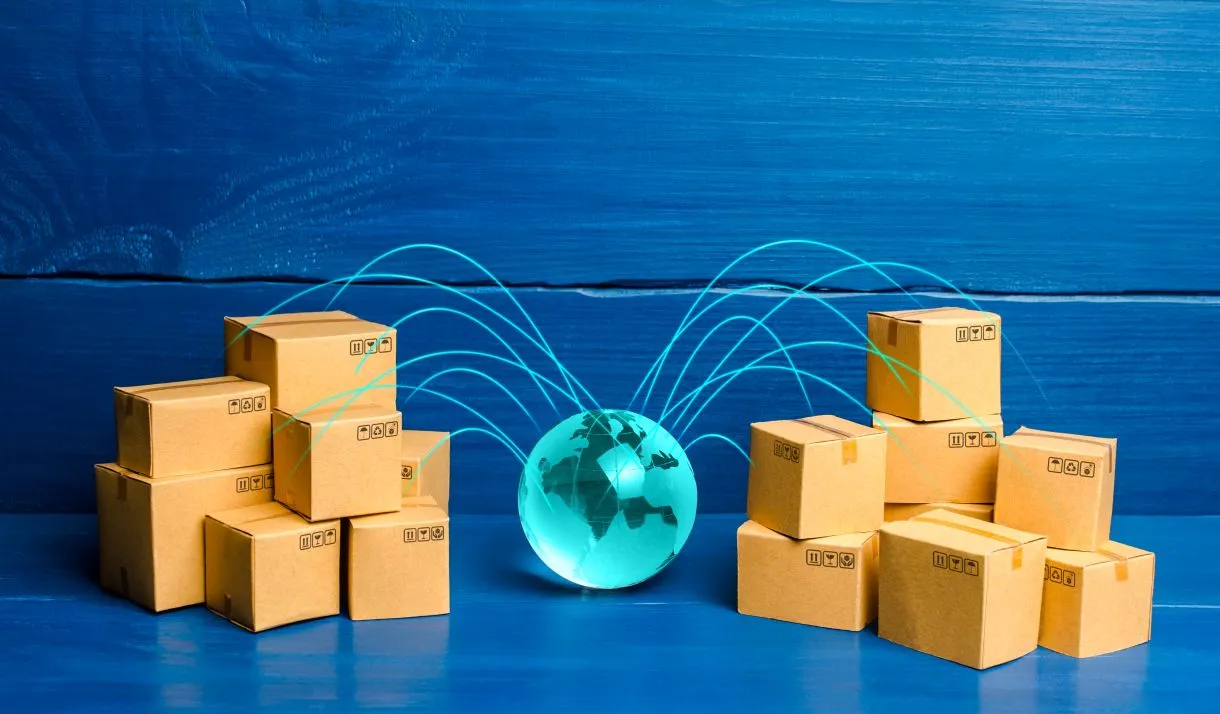
The global supply chain landscape has changed dramatically over the past decade. Businesses now operate in an environment where geopolitical tensions, evolving trade regulations, climate-related disruptions, labor shortages, cyber threats, and changing consumer expectations have become part of everyday operations. In this new reality, success is no longer determined solely by how quickly products move from origin to destination. It depends on how effectively organizations can anticipate disruption, adapt to changing conditions, and maintain business continuity.
This evolution has elevated logistics resilience from an operational objective to a strategic business priority. Organizations are increasingly recognizing that resilient logistics networks are not built through a single transportation provider or technology platform. Instead, they are created through ecosystems of specialized logistics partners working together to reduce risk, improve flexibility, and strengthen decision-making across the supply chain.
Rather than managing disconnected logistics functions independently, businesses are integrating freight forwarding, air cargo, cold chain logistics, airline representation, warehousing, and distribution into coordinated operational strategies. These partnerships enable organizations to respond faster to unexpected events while maintaining customer service and protecting long-term growth.
According to the World Economic Forum, resilient and digitally connected supply chains are becoming fundamental to global competitiveness, encouraging organizations to diversify logistics capabilities and strengthen strategic collaboration.
As global commerce continues evolving, logistics resilience has become one of the defining characteristics of successful supply chain management.
Why Logistics Resilience Matters More Than Ever
Modern supply chains are more interconnected—and more vulnerable—than ever before.
A single disruption can quickly affect suppliers, manufacturers, transportation providers, warehouses, retailers, and customers across multiple continents. Whether caused by weather events, geopolitical uncertainty, port congestion, infrastructure challenges, or changing trade policies, disruptions now occur with greater frequency and broader operational impact.
This has fundamentally changed how businesses evaluate logistics performance.
Instead of asking, “How can we reduce transportation costs?” organizations are increasingly asking:
- How quickly can we recover from disruption?
- Do we have multiple transportation options?
- Can our logistics partners adapt to changing conditions?
- Are our operations supported by real-time information?
- Can we continue serving customers during unexpected events?
These questions demonstrate that logistics resilience has become a competitive differentiator rather than simply a risk management strategy.
Research from McKinsey & Company consistently shows that organizations investing in resilient logistics capabilities recover more quickly from disruption while outperforming competitors over the long term.
Businesses that strengthen resilience today are positioning themselves to navigate tomorrow’s uncertainty with greater confidence.
What Creates a Resilient Logistics Network?
Resilient logistics is built on several interconnected capabilities rather than one individual solution.
These include:
- Operational flexibility
- Specialized expertise
- End-to-end visibility
- Technology integration
- Diversified transportation options
- Strategic partnerships
- Data-driven decision-making
- Continuous communication
When these capabilities work together, organizations become significantly more adaptable during periods of disruption.
Rather than depending on one provider to perform every logistics function, resilient supply chains leverage specialists who contribute expertise across different operational areas.
This collaborative approach reduces risk while improving overall supply chain performance.
Instead of creating redundancy, specialization creates strength.
Freight Forwarding Provides the Operational Foundation
International transportation remains one of the most important components of resilient logistics.
Freight forwarders coordinate cargo movement across countries while managing customs procedures, transportation planning, carrier relationships, documentation, and multimodal shipping strategies.
Providers of global freight forwarding solutions play a central role in maintaining business continuity because they can rapidly evaluate alternative transportation routes, identify carrier capacity, and adjust logistics strategies when disruptions occur.
Modern freight forwarders contribute far more than transportation coordination.
They provide market intelligence, regulatory expertise, operational planning, and strategic guidance that help businesses maintain supply chain continuity during changing market conditions.
As global trade becomes increasingly complex, freight forwarding has evolved into one of the foundational pillars of logistics resilience.
Cold Chain Specialists Protect Critical Products
Some products require much more than transportation—they require continuous protection throughout the entire logistics journey.
Pharmaceuticals, biotechnology products, fresh produce, seafood, flowers, dairy products, and other temperature-sensitive cargo depend on strict environmental control from origin to destination.
Specialized cold chain logistics solutions provide the infrastructure, monitoring systems, regulatory expertise, and handling procedures necessary to maintain product integrity throughout transportation and storage.
Cold chain resilience is especially important because product loss often cannot be recovered after a temperature excursion.
By integrating cold chain specialists into broader logistics strategies, organizations reduce spoilage, improve regulatory compliance, strengthen customer confidence, and minimize operational risk.
According to Grand View Research, the continued growth of pharmaceutical logistics and fresh food distribution is driving sustained expansion across the global cold chain market.
As demand for temperature-sensitive transportation continues increasing, cold chain specialists will remain an essential component of resilient global supply chains.
Specialized Logistics Partners Improve Agility
One of the greatest strengths of resilient logistics networks is agility.
Every disruption requires a different operational response.
A customs issue demands regulatory expertise.
A production delay may require expedited transportation.
Temperature-sensitive cargo requires specialized handling.
Capacity shortages call for stronger airline relationships.
No single logistics provider can be the leading expert in every one of these areas.
Instead, organizations increasingly benefit from working with specialized logistics partners that contribute deep operational knowledge while collaborating within a broader logistics ecosystem.
This model allows businesses to adapt more quickly because every challenge can be addressed by professionals with focused expertise.
Rather than relying on generalized logistics capabilities, organizations gain access to specialists capable of solving complex problems more efficiently.
This operational agility has become one of the defining advantages of resilient supply chains.
Collaboration Is the Core of Modern Logistics Resilience
Perhaps the most important characteristic of resilient logistics is collaboration.
Freight forwarders, cold chain providers, airlines, GSSAs, warehouses, customs specialists, technology providers, and distributors all contribute valuable information and expertise throughout the supply chain.
When these organizations share information and coordinate operational decisions, businesses gain greater flexibility, faster response times, and stronger resilience.
Instead of operating as independent service providers, specialized logistics partners become part of an interconnected ecosystem focused on common business objectives.
This collaborative approach allows organizations to manage complexity more effectively while reducing operational risk across global supply chains.
As logistics networks continue evolving, collaboration will remain one of the most important competitive advantages available to businesses operating in international markets.
Air Cargo Creates Transportation Flexibility
No supply chain can rely on a single transportation mode indefinitely.
Weather events, geopolitical conflicts, port congestion, labor shortages, infrastructure constraints, and seasonal demand fluctuations all have the potential to disrupt planned transportation routes. Organizations that depend exclusively on one shipping method often have fewer options when unexpected events occur.
Air cargo provides the flexibility needed to respond quickly when time becomes a critical factor.
Rather than serving only as an emergency transportation solution, modern businesses increasingly integrate air freight into broader logistics planning. This allows organizations to accelerate high-priority shipments, protect production schedules, avoid inventory shortages, and maintain customer commitments without disrupting their entire supply chain.
Providers of air cargo operations help organizations combine speed with strategic transportation planning, making air freight an important component of resilient logistics ecosystems.
According to the International Air Transport Association (IATA), air cargo continues to facilitate more than one-third of global trade by value, demonstrating its critical role in supporting international commerce and time-sensitive industries.
When integrated alongside ocean freight, trucking, rail, and warehousing, air cargo strengthens logistics resilience by providing businesses with multiple transportation options rather than a single operational pathway.
Airline Representation Expands Capacity and Market Access
Resilient logistics depends not only on transportation providers but also on access to reliable airline capacity.
General Sales and Service Agents (GSSAs) play a strategic role by helping airlines optimize cargo sales, strengthen commercial relationships, expand into new markets, and maximize available capacity.
Although customers may not always interact directly with a GSSA, airline representation significantly improves the efficiency of the global air cargo network.
Providers of GSSA airline cargo solutions bridge the gap between airlines, freight forwarders, and shippers, helping businesses secure more reliable access to transportation capacity while improving commercial coordination across international markets.
Organizations such as the International Air Cargo Association (TIACA) continue emphasizing collaboration, digital innovation, and strategic airline partnerships as essential components of the future global air cargo industry.
By strengthening airline connectivity, GSSAs contribute directly to more resilient logistics networks capable of adapting to fluctuating market demand.
Technology Connects Specialized Logistics Partners
Technology has become one of the strongest enablers of logistics resilience.
Modern supply chains generate enormous amounts of operational information across transportation providers, warehouses, customs authorities, inventory systems, airlines, and distribution centers.
Without connected technology, this information remains fragmented.
Integrated digital platforms allow specialized logistics partners to share operational data in real time, improving collaboration and accelerating decision-making throughout the supply chain.
Today’s resilient logistics networks increasingly rely on:
- Transportation Management Systems (TMS)
- Warehouse Management Systems (WMS)
- Artificial Intelligence (AI)
- Internet of Things (IoT) monitoring
- Predictive analytics
- Digital documentation
- Cloud-based logistics platforms
- Automated customer notifications
These technologies enable organizations to identify disruptions earlier, evaluate alternative transportation strategies, and coordinate responses across multiple logistics providers.
According to Gartner, organizations investing in connected digital supply chains continue improving agility, operational resilience, and long-term business performance.
Technology does not replace logistics expertise.
Instead, it amplifies the effectiveness of specialized partners by enabling faster collaboration and more informed operational decisions.
Visibility Enables Proactive Decision-Making
One of the defining characteristics of resilient logistics is visibility.
Organizations that lack operational visibility often discover disruptions only after inventory shortages, production delays, or customer service issues have already occurred.
Modern supply chains require real-time information across transportation, warehousing, customs, inventory, and distribution activities.
However, visibility alone is not enough.
The real competitive advantage comes from transforming visibility into action.
Organizations increasingly combine real-time tracking with predictive analytics to identify operational risks before they escalate.
Businesses investing in connected visibility platforms improve:
- Shipment monitoring
- Inventory planning
- Exception management
- Customer communication
- Operational forecasting
- Transportation planning
Organizations interested in learning how visibility evolves into operational intelligence can also explore How End-to-End Visibility Is Becoming a Competitive Advantage.
Visibility enables logistics teams to anticipate change rather than simply reacting to it.
Integrated Logistics Ecosystems Strengthen Resilience
One of the most significant trends shaping global logistics is the transition from fragmented service providers to integrated logistics ecosystems.
Rather than managing separate vendors for freight forwarding, cold chain logistics, warehousing, air cargo, airline representation, and distribution, organizations increasingly seek coordinated logistics partners capable of working together under a unified strategy.
Integrated ecosystems improve:
- Communication between logistics partners
- Operational flexibility
- Shipment visibility
- Inventory coordination
- Transportation efficiency
- Risk management
- Customer experience
Instead of solving problems independently, specialized providers collaborate to create stronger overall supply chain performance.
Organizations interested in understanding how these ecosystems function can also explore The Complete Guide to Integrated Logistics: Building a More Connected Global Supply Chain.
Integrated logistics transforms resilience from an isolated capability into an organization-wide competitive advantage.
Data and Artificial Intelligence Improve Operational Resilience
Every logistics activity generates valuable data.
Transportation milestones, warehouse performance, customs clearance, carrier capacity, shipment conditions, and customer demand all contribute insights that help organizations make better business decisions.
Artificial intelligence is accelerating this transformation by helping businesses identify patterns, predict disruptions, and recommend operational improvements before problems occur.
Examples include:
- Predictive demand forecasting
- Route optimization
- Capacity planning
- Inventory optimization
- Exception management
- Estimated arrival predictions
- Risk identification
Rather than relying solely on historical reports, businesses are increasingly using predictive logistics to improve resilience before disruptions impact customers.
Organizations combining specialized logistics expertise with AI-powered decision-making are creating more agile, adaptable, and efficient supply chains.
The future of logistics resilience will depend not only on moving products efficiently but also on making faster, smarter decisions across increasingly connected global supply chains.
Building Logistics Resilience for the Future
Logistics resilience is not achieved through a single investment or technology implementation.
It is built over time by continuously strengthening logistics networks, expanding transportation options, improving collaboration, and investing in specialized expertise.
Organizations preparing for the next decade should focus on creating logistics strategies that are flexible enough to adapt to changing business conditions while remaining scalable as operations grow.
Several best practices can help strengthen long-term logistics resilience.
Diversify Transportation Strategies
Businesses should avoid relying exclusively on one carrier, one transportation mode, or one geographic gateway.
Combining ocean freight, trucking, rail, and air cargo operations creates greater flexibility when unexpected disruptions occur.
Organizations with multiple transportation options recover faster while maintaining service continuity.
Strengthen Strategic Partnerships
Successful logistics networks depend on relationships built through trust, transparency, and shared business objectives.
Organizations should evaluate logistics providers based not only on operational capabilities but also on their willingness to collaborate, innovate, and support long-term business growth.
Invest in Connected Technologies
Visibility platforms, predictive analytics, transportation management systems, warehouse management systems, and artificial intelligence all contribute to stronger operational decision-making.
Technology enables specialized logistics partners to share information more effectively while improving responsiveness throughout the supply chain.
Develop Risk Management Plans
Every organization should maintain contingency plans for transportation disruptions, supplier shortages, customs delays, capacity constraints, and changing market conditions.
Preparing alternative logistics strategies before disruptions occur significantly reduces operational risk.
Measure Performance Continuously
Resilience should be measured using meaningful performance indicators such as:
- Transportation reliability
- Recovery time after disruptions
- Inventory availability
- Customer satisfaction
- Carrier performance
- Shipment visibility
- Operational flexibility
- On-time delivery performance
Continuous performance monitoring allows organizations to improve resilience over time rather than reacting only when problems arise.
Why Logistics Resilience Supports Sustainable Business Growth
Although resilience is often discussed in relation to disruption management, its long-term value extends much further.
Organizations with resilient logistics networks are better positioned to:
- Expand into international markets
- Launch new products faster
- Improve customer satisfaction
- Support omnichannel distribution
- Reduce inventory inefficiencies
- Increase transportation flexibility
- Strengthen supplier relationships
- Scale operations with greater confidence
In other words, logistics resilience creates both operational stability and business opportunity.
Companies capable of adapting quickly to changing market conditions often outperform competitors because they can continue serving customers when others face delays or disruptions.
This makes resilience a driver of sustainable growth rather than simply a defensive strategy.
Why the LCX Group Ecosystem Strengthens Logistics Resilience
Modern supply chains require expertise across multiple logistics disciplines.
No single provider can deliver world-class capabilities in every operational area.
Through its integrated ecosystem of specialized companies, LCX Group helps organizations strengthen logistics resilience by combining complementary services that work together within one connected strategy.
Businesses benefit from:
Global freight forwarding solutions that coordinate international transportation, customs procedures, multimodal routing, and supply chain planning.
Cold chain logistics solutions designed for pharmaceuticals, perishables, seafood, floral logistics, biotechnology products, and temperature-sensitive cargo.
Air cargo operations that support time-critical shipments, healthcare logistics, ecommerce fulfillment, and urgent transportation requirements.
Airline cargo solutions that strengthen commercial airline partnerships, improve market access, and optimize cargo capacity through professional GSSA services.
Together, these specialized capabilities create a connected logistics ecosystem that enables businesses to improve flexibility, operational efficiency, visibility, and long-term resilience.
Rather than managing multiple disconnected providers, organizations gain access to an integrated network of logistics specialists aligned around common business objectives.
The Future of Logistics Resilience
Looking beyond 2026, logistics resilience will continue evolving alongside technology, sustainability initiatives, and global trade patterns.
Several developments are expected to shape the next generation of resilient supply chains.
Artificial Intelligence Will Become More Predictive
AI will increasingly support route optimization, demand forecasting, inventory positioning, carrier selection, and disruption prediction, allowing businesses to make proactive decisions before operational issues escalate.
Regional Logistics Networks Will Expand
Nearshoring and regional distribution hubs will continue reducing dependence on long international supply chains while improving transportation flexibility.
Sustainability Will Become Operational
Environmental performance will increasingly influence logistics strategy through route optimization, emissions reporting, energy-efficient warehousing, and sustainable transportation planning.
Digital Collaboration Will Continue Growing
Cloud-based logistics platforms will further strengthen communication between freight forwarders, airlines, warehouses, customs brokers, and customers, creating even more connected supply chain ecosystems.
Organizations embracing these trends today will be better positioned to respond to tomorrow’s challenges with confidence and agility.
Conclusion
Logistics resilience has become one of the defining competitive advantages in modern global commerce.
Organizations can no longer rely solely on transportation efficiency or cost optimization. Instead, they must build adaptable logistics ecosystems capable of responding quickly to disruption while maintaining operational performance.
Specialized logistics partners contribute the expertise, flexibility, and collaboration necessary to strengthen every stage of the supply chain.
Freight forwarding, cold chain logistics, air cargo, airline representation, digital technologies, and integrated logistics strategies each play an essential role in reducing operational risk and improving business continuity.
When these capabilities operate together within a connected ecosystem, businesses gain more than resilient transportation—they gain a stronger foundation for growth, innovation, and long-term competitiveness.
As global markets continue evolving, organizations that invest in logistics resilience today will be better prepared to navigate uncertainty, exceed customer expectations, and build supply chains capable of supporting success well into the future.