
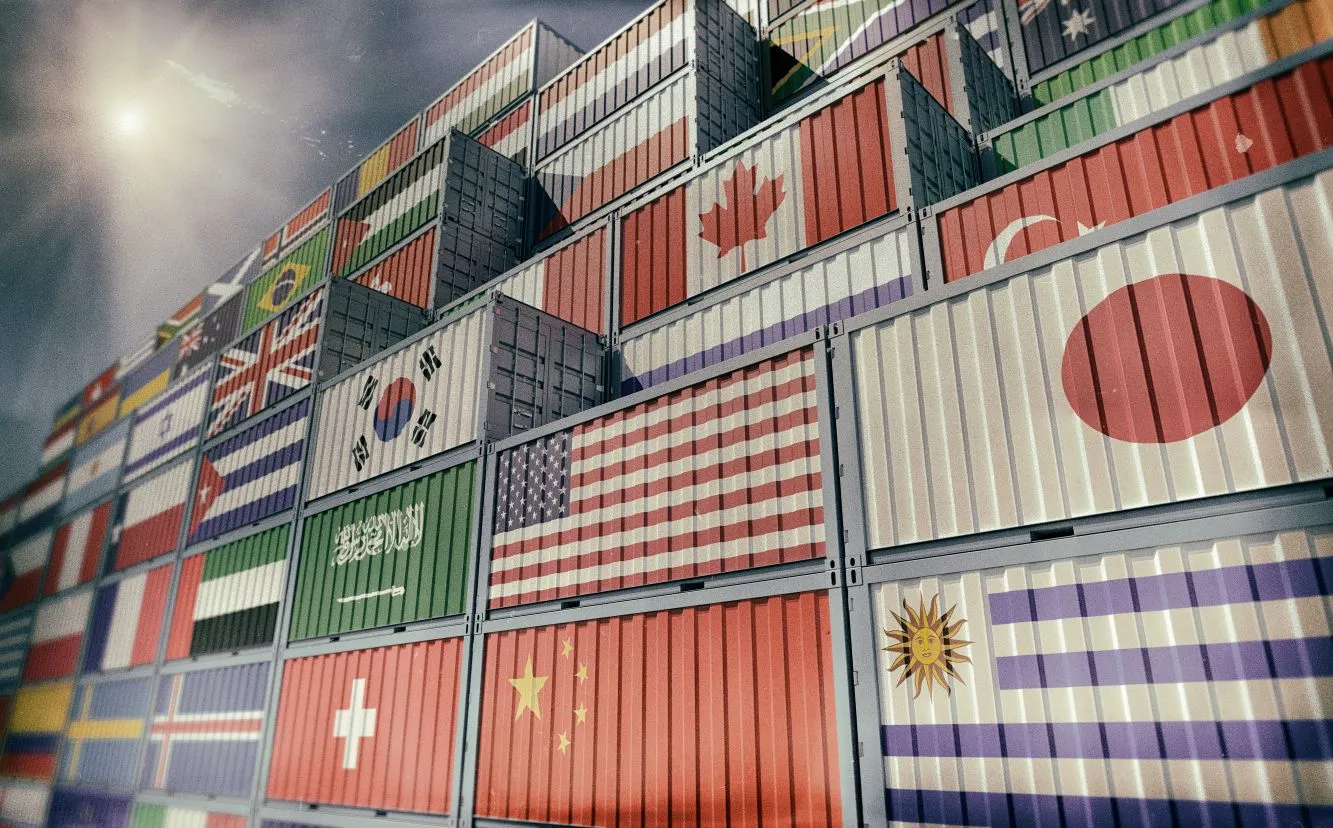
The map of global trade is changing.
For decades, businesses designed supply chains around established manufacturing centers, major ports, predictable transportation routes, and highly optimized international trade lanes. Those corridors remain important, but the forces determining where goods are produced and how they move are becoming more complex.
Geopolitical uncertainty, supply chain diversification, tariffs and trade policy, regionalization, infrastructure investment, new manufacturing locations, and changing consumer demand are influencing global cargo flows in 2026.
This does not mean globalization is disappearing.
It means the routes supporting globalization are being redesigned.
UN Trade and Development reported that global goods trade reached approximately $13.7 trillion during the first half of 2026, while also describing growth as increasingly uneven across regions and industries.
For logistics organizations, this creates an important strategic challenge.
When trade flows change, transportation networks must change with them.
Ports, airports, warehouses, freight forwarders, airlines, trucking networks, customs infrastructure, and distribution hubs all need to respond to where cargo is moving next.
Understanding trade corridors is therefore becoming increasingly important for companies designing global supply chains.
What Is a Global Trade Corridor?
A global trade corridor is a network connecting major production, transportation, and consumption markets through infrastructure and logistics services.
A corridor may include:
- Manufacturing regions
- Ports and cargo airports
- Road and rail infrastructure
- Warehouses and distribution centers
- Customs and border facilities
- Ocean and air transportation
- Freight forwarding networks
- Regional logistics hubs
Trade corridors are therefore much more than routes between two countries.
They are interconnected logistics ecosystems that allow products to move from production centers to customers.
The strongest corridors combine transportation capacity with infrastructure, efficient customs processes, logistics expertise, market access, and connectivity to other regions.
As global sourcing strategies change, some established corridors may evolve while alternative gateways and regional connections gain strategic importance.
Why Are Trade Corridors Changing in 2026?
Several forces are reshaping international trade simultaneously.
Geopolitical tensions are influencing sourcing and transportation decisions. Businesses are evaluating supplier concentration. Governments are pursuing new industrial policies. Companies are positioning manufacturing closer to important consumer markets.
At the same time, digitalization and rapidly expanding technology industries are creating new categories of high-value international cargo.
UN Trade and Development identifies geopolitical fragmentation, supply chain reconfiguration, digital transformation, and tighter regulation among the major forces redefining trade in 2026. It also reports that nearly two-thirds of global trade occurs within value chains that are themselves being reshaped by these pressures.
For logistics companies, the implications are significant.
A manufacturing shift from one country to another creates new freight lanes.
A new distribution hub changes regional transportation requirements.
A disrupted maritime corridor increases demand for alternative gateways.
A rapidly growing technology industry can create additional demand for time-sensitive air transportation.
Changing trade flows therefore produce changing logistics networks.
Supply Chain Diversification Is Creating More Complex Trade Maps
For many organizations, supply chain strategy once focused heavily on efficiency and cost optimization.
That approach is evolving.
Companies increasingly evaluate where excessive dependence on one supplier, manufacturing region, transportation route, or gateway creates risk.
Instead of completely abandoning established supply chains, businesses may add alternative suppliers, manufacturing locations, gateways, or transportation options.
This creates a more diversified trade map.
Organizations interested in this strategy can explore Global Supply Chains: How Diversified Logistics Networks Reduce Disruption Risk.
The result is not necessarily less global trade.
In many cases, it means trade is distributed across a broader network of relationships.
This distinction matters.
The future of global logistics may not be defined by a simple shift from globalization to regionalization. Instead, companies may operate hybrid networks that combine global sourcing with regional manufacturing, alternative gateways, and multiple transportation strategies.
Regionalization and Nearshoring Are Creating New Logistics Requirements
Nearshoring has become an important part of the supply chain conversation because companies are evaluating whether selected production activities should move closer to major customer markets.
But moving production geographically closer does not eliminate logistics.
It changes logistics.
New manufacturing locations require access to transportation infrastructure, customs capabilities, warehouses, freight forwarding, suppliers, distribution networks, and international gateways.
This is particularly relevant across the Americas, where closer integration between manufacturing and major consumer markets can create new transportation requirements across road, air, and ocean networks.
As these networks evolve, logistics providers must understand not only established international routes but also the regional connections that feed them.
This makes global freight forwarding solutions increasingly important for businesses navigating changing sourcing and distribution strategies.
Freight forwarders can help companies evaluate routes, gateways, transportation modes, customs environments, and alternative network configurations as cargo flows change.
Alternative Gateways Are Becoming Strategic Assets
Changing trade corridors also increase the importance of alternative ports and airports.
Historically, businesses may have concentrated cargo through major gateways because they offered the greatest transportation frequency, infrastructure, and carrier options.
Those advantages remain significant.
However, recent supply chain disruptions have demonstrated the risks of excessive dependence on individual transportation nodes.
UN Trade and Development noted in 2026 that geopolitical tensions and disruptions around major chokepoints have caused shipping routes to shift and increased pressure on alternative corridors connecting Asia, Europe, and Africa.
For businesses, this means secondary gateways may become strategically valuable even when they are not the primary option under normal conditions.
An alternative port, cargo airport, border crossing, or distribution hub can provide another pathway when the preferred corridor experiences disruption.
This connects directly with the broader concept of logistics diversification.
The strategic advantage is not using every gateway simultaneously.
It is understanding which alternatives are operationally viable before they are urgently needed.
Trade Corridors Are Becoming More Dynamic
Perhaps the most important change in 2026 is that businesses can no longer assume yesterday’s trade patterns will automatically define tomorrow’s logistics networks.
Some corridors are expanding while others experience pressure from geopolitical events, changing demand, tariffs, capacity, or infrastructure constraints.
Air cargo provides a clear example.
IATA reported that global air cargo demand increased 3.9% year over year in July 2026, but performance varied considerably between major trade lanes. Asia–North America grew 9.2%, intra-Asia increased 6.1%, and Europe–Asia grew 3.1%, while some Middle East-linked corridors contracted significantly amid regional disruption.
These differences demonstrate why logistics planning increasingly requires a corridor-level perspective.
Global trade may continue growing while individual routes behave very differently.
For supply chain leaders, understanding those differences can influence sourcing, transportation capacity, inventory positioning, and gateway selection.
The competitive advantage will increasingly belong to organizations that can recognize changing trade patterns early—and adapt their logistics networks accordingly.
Air Cargo Is Becoming More Important Across Changing Trade Corridors
As manufacturing and distribution networks evolve, aviation provides something particularly valuable: the ability to connect markets quickly.
Air cargo is especially important for high-value, time-sensitive, and perishable products that cannot always accommodate long transportation cycles.
Electronics, pharmaceuticals, aerospace components, automotive parts, flowers, seafood, fresh produce, and urgent industrial shipments can all depend on aviation when speed and product value justify air transportation.
Changing trade flows can therefore create new opportunities for cargo airlines and airports.
When manufacturing expands in a region, air cargo demand may increase alongside it. When businesses diversify suppliers, new origin-destination combinations can emerge. When another transportation corridor becomes disrupted, aviation can provide an alternative for critical cargo.
Specialized air cargo operations help connect these changing markets with international transportation networks.
The broader role of aviation within international commerce is explored in How Aviation Connects Global Supply Chains and Keeps World Trade Moving.
Air cargo does not replace other transportation modes. Its strategic value comes from adding speed and flexibility to increasingly diversified trade networks.
Perishable Trade Corridors Depend on Specialized Cold Chains
Not every trade corridor can be evaluated only through transportation capacity.
For temperature-sensitive cargo, infrastructure and specialized handling capabilities are equally important.
Latin America, for example, is an important source region for flowers, seafood, fruits, vegetables, and other perishables moving toward North American and international markets.
These products require logistics networks capable of protecting temperature, quality, and shelf life throughout transportation.
That can include refrigerated trucking, cold storage, airport handling, monitoring systems, customs coordination, and rapid transfers between transportation stages.
Specialized cold chain logistics solutions become essential within these corridors.
A new airport or transportation route may appear attractive geographically, but it becomes a viable perishable gateway only when the supporting cold chain infrastructure can protect the cargo.
This illustrates an important principle: the strength of a trade corridor depends not only on where it connects, but also on what types of cargo it can reliably support.
Logistics Hubs Are Competing for Global Cargo Flows
Ports, airports, inland terminals, and logistics zones increasingly compete to become strategic nodes within changing trade networks.
Infrastructure investment can influence which gateways gain importance.
Airport cargo facilities, port capacity, road connections, customs technology, warehousing, and intermodal infrastructure can make a region more attractive for manufacturers, importers, exporters, and logistics companies.
But infrastructure alone is not enough.
Successful logistics hubs also require connectivity.
A port needs inland transportation. An airport needs trucking networks and cargo handling. Warehouses need access to major consumer and production markets. International gateways require efficient customs processes.
The most competitive hubs function as connected ecosystems rather than isolated transportation facilities.
For businesses, evaluating these ecosystems can become increasingly important when deciding where inventory, distribution, and transportation activities should be positioned.
AI Can Help Businesses Understand Changing Trade Flows
The growing complexity of international trade also creates a data challenge.
Businesses must evaluate transportation rates, transit times, capacity, demand, inventory, carrier performance, geopolitical conditions, weather, congestion, and other variables across multiple corridors.
Artificial intelligence can help organizations analyze these datasets and identify patterns more efficiently.
Predictive systems may detect changing transportation performance, emerging capacity constraints, or demand patterns before they become obvious through traditional reporting.
This can support decisions about routing, inventory positioning, transportation modes, and alternative gateways.
Organizations can explore this transformation in How AI Is Reshaping Global Logistics: From Predictive Planning to Smarter Supply Chains.
AI does not determine global trade strategy independently.
Its value comes from helping experienced logistics professionals understand changing conditions faster and evaluate a greater number of possible scenarios.
Freight Forwarders Need to Think Beyond Individual Shipments
Changing trade corridors are also transforming the role of freight forwarders.
Traditional forwarding focused heavily on moving individual shipments from origin to destination.
That remains fundamental, but businesses increasingly need broader network intelligence.
Which gateways offer alternatives?
Where is transportation capacity expanding?
Which corridors are becoming less predictable?
Could another transportation mode improve reliability?
Where should inventory be positioned if sourcing changes?
These questions move freight forwarding closer to strategic network management.
The modern freight forwarder can help businesses coordinate carriers, transportation modes, customs, warehouses, and distribution while also identifying alternatives when established routes become less effective.
This is where freight forwarding connects with integrated logistics.
As trade flows become more dynamic, the ability to connect multiple logistics capabilities becomes increasingly valuable.
GSSAs Help Airlines Identify Emerging Cargo Opportunities
Changing trade corridors also create opportunities for airlines.
When manufacturing, agriculture, ecommerce, or other industries expand within a market, cargo demand can change quickly.
General Sales and Service Agents help airlines understand these developments.
Through market intelligence, freight forwarder relationships, cargo sales, and capacity analysis, providers of airline cargo solutions can help connect airline networks with emerging demand.
This makes GSSAs more than commercial representatives.
They can become an important source of regional intelligence for airlines evaluating where cargo demand is developing and how available capacity can be positioned effectively.
In a global market where trade corridors are continuously evolving, local knowledge becomes increasingly valuable.
How Should Businesses Prepare for Changing Trade Corridors?
Companies do not need to predict exactly how every global trade route will develop.
They do need to understand their exposure.
A useful starting point is identifying where the supply chain depends excessively on a particular country, gateway, transportation mode, carrier, or distribution hub.
Businesses can then evaluate realistic alternatives.
This may involve:
- Mapping primary and secondary gateways
- Evaluating alternative transportation modes
- Monitoring corridor-level performance
- Diversifying carrier relationships
- Reviewing inventory locations
- Understanding regional infrastructure
- Developing contingency routes
- Strengthening relationships with specialized logistics partners
Technology can improve this process, but logistics expertise remains essential.
The goal is not constant rerouting.
It is having enough network intelligence to recognize when conditions justify a change.
LCX Group Connects Specialized Capabilities Across Global Trade
The changing structure of international trade reinforces the importance of connected logistics capabilities.
Within the LCX Group ecosystem, specialized companies operate across different parts of these global trade networks.
LCX Freight supports international freight forwarding, helping businesses coordinate transportation, customs, warehousing, and distribution across changing trade lanes.
LCX Fresh provides specialized cold chain capabilities for perishables and temperature-sensitive products moving through international markets.
Sunrise Air Cargo provides aviation connectivity for cargo requiring efficient international air transportation.
BlueX GSSA connects airlines with freight forwarders and regional cargo markets through specialized airline representation.
Together, these capabilities reflect how modern trade corridors actually function: through interconnected networks of transportation, specialized handling, commercial representation, technology, and logistics expertise.
The Future of Trade Corridors Will Be More Dynamic
Global trade is not moving toward one new permanent map.
It is becoming more dynamic.
Established trade corridors will remain important, but alternative routes, regional manufacturing centers, emerging logistics hubs, and diversified transportation networks will continue gaining strategic relevance.
Technology will make these changes easier to identify. AI will improve predictive planning. Greater shipment visibility will help businesses understand network performance. Specialized logistics providers will help companies activate alternatives when conditions change.
This means logistics strategy must become increasingly adaptable.
Companies cannot control geopolitical events, infrastructure disruptions, changing trade policy, or every shift in global demand.
They can control how prepared their logistics networks are to respond.
Conclusion
Globalization is not disappearing in 2026.
It is being reorganized.
Manufacturing strategies are changing. Companies are diversifying suppliers. Nearshoring is creating new regional connections. Alternative gateways are becoming more important. Air cargo is connecting time-sensitive markets. Specialized logistics infrastructure is determining which corridors can support increasingly complex cargo.
Together, these forces are reshaping trade corridors and the logistics networks that support them.
For businesses, the strategic implication is clear.
Supply chains designed around fixed assumptions will become increasingly vulnerable when trade patterns change.
The stronger approach is to understand where cargo flows are evolving, identify viable alternatives, connect multiple transportation capabilities, and build logistics networks capable of adapting alongside global commerce.
The future of global trade will not depend on one route, one gateway, or one transportation mode.
It will depend on connected networks capable of moving with the changing map of world trade.